How Much Water to Store for an Emergency (and Where to Keep It)
This post contains affiliate links. If you buy through them, we may earn a small commission at no extra cost to you. Learn more.
You can go weeks without food but only a few days without water. And water is the thing most families forget until the store shelves are already empty. Water mains break, boil-water notices happen, wells stop pumping when the power goes out, and hurricanes contaminate supplies.
The good news: storing water is cheap and easy. Here is exactly how much you need and where to put it in a normal house.
How much water to store
The CDC and Ready.gov recommend storing at least 1 gallon of water per person, per day, for at least 3 days. That covers drinking plus basic cooking and hygiene. If you can, aim for a 2-week supply.
Store extra for anyone who is pregnant, nursing, sick, or living in a hot climate. And do not forget your pets.
| Household | 3-day supply | 2-week supply |
|---|---|---|
| 1 adult | 3 gallons | 14 gallons |
| 2 adults | 6 gallons | 28 gallons |
| 2 adults + 2 kids | 12 gallons | 56 gallons |
| Add a medium dog | Add about 1 to 3 gallons | Add about 5 to 14 gallons |
A standard case of 24 half-liter bottles holds about 3 gallons, so one case is roughly a 3-day supply for one person.
The 3 easiest ways to store water
1. Store-bought bottled water
The simplest option. Grab a few cases, keep them sealed, and check the date on the package. It is portable, which matters if you have to leave home.
2. 5- to 7-gallon jugs
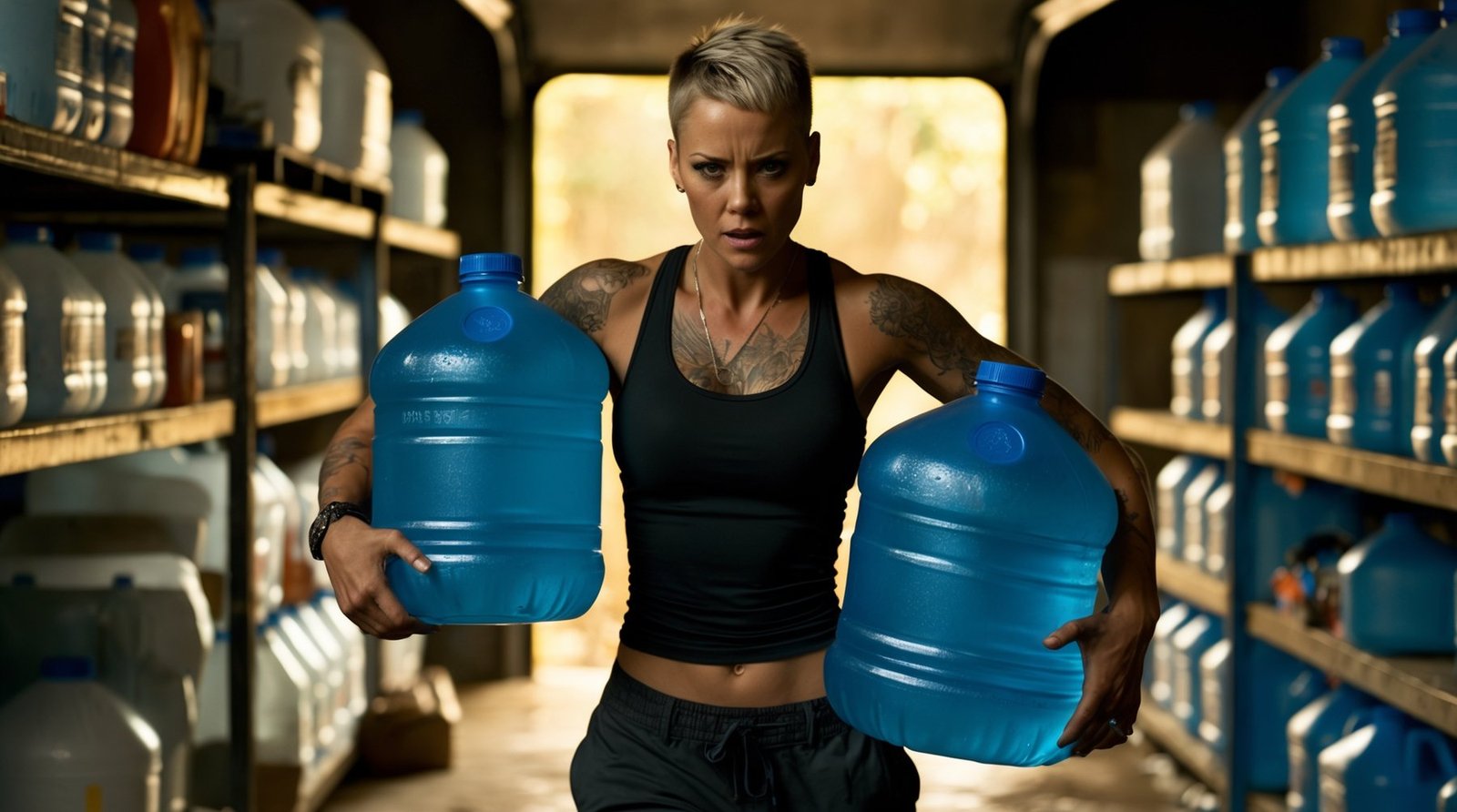
Food-grade water jugs (usually blue) are the best balance of size and weight. A full 7-gallon jug weighs close to 60 pounds, so if lifting that is a problem, stick with 5-gallon containers, which weigh about 42 pounds full.
3. Large water barrels
55-gallon food-grade barrels hold a lot, but a full one weighs over 450 pounds. It is not moving once it is filled. You will need a siphon or barrel pump to get water out. Great if you have a garage or basement corner and a bigger family.
Never use old milk jugs. Milk proteins are almost impossible to fully clean out, and the plastic breaks down. Also never reuse containers that held chemicals like bleach or pesticides.
Where to keep it in a normal house
Water likes it cool and dark. The CDC recommends a cool spot away from direct sunlight. Good places:
- Under beds, in shallow bins
- The back of closets
- Under the stairs
- A basement corner, raised off the concrete on a board or pallet
- Under the kitchen or bathroom sink
Keep stored water away from gasoline, paint, pesticides and cleaning chemicals. Plastic can absorb fumes over time.
How to store your own tap water
If your home has safe tap water, filling your own containers is the cheapest way to go.
- Use food-grade containers made for water storage.
- Wash them with dish soap and rinse well.
- Sanitize them with a diluted solution of unscented bleach and water, following the CDC or container instructions, then let them air dry.
- Fill with tap water and close tightly.
- Label each container “Drinking Water” with the date.
- Replace the water every 6 months. Set a reminder on your phone. Use the old water on your plants.
If you run out: making water safe
If you have to use water from an uncertain source, the CDC says boiling is the best method: bring clear water to a rolling boil for 1 minute (3 minutes if you live above 6,500 feet).
If you cannot boil it, unscented household bleach works for disinfecting clear water. The amount depends on the bleach strength, so follow the instructions on the label or the CDC’s chart. For common 6% bleach, it is about 8 drops per gallon. Stir, then wait at least 30 minutes before drinking.
A portable water filter (like a straw filter or the Sawyer Squeeze) is a great backup to keep in your kit and your car. Note that most basic filters remove bacteria and parasites but not viruses or chemicals, so check what yours is rated for.
Hidden water already in your house
In a true emergency, you already have more water than you think:
- Your water heater holds 30 to 80 gallons. Turn off the power or gas to it first, let it cool, then drain from the valve at the bottom.
- Ice cubes in your freezer.
- Toilet tanks (the tank, not the bowl) as long as you do not use colored cleaning tablets. Better for flushing and washing than drinking.
- Canned fruits and vegetables have liquid you can drink.
Storm coming? Fill your bathtub and every big pot before it hits. Use the tub water for flushing toilets and washing up, and save your stored drinking water for drinking.
Your water checklist
- At least 3 gallons per person stored (goal: 14)
- Extra for pets
- Containers labeled and dated
- A phone reminder to rotate every 6 months
- Unscented bleach and a portable filter as backup
- A manual siphon or pump if you use large containers